Research Education and Training
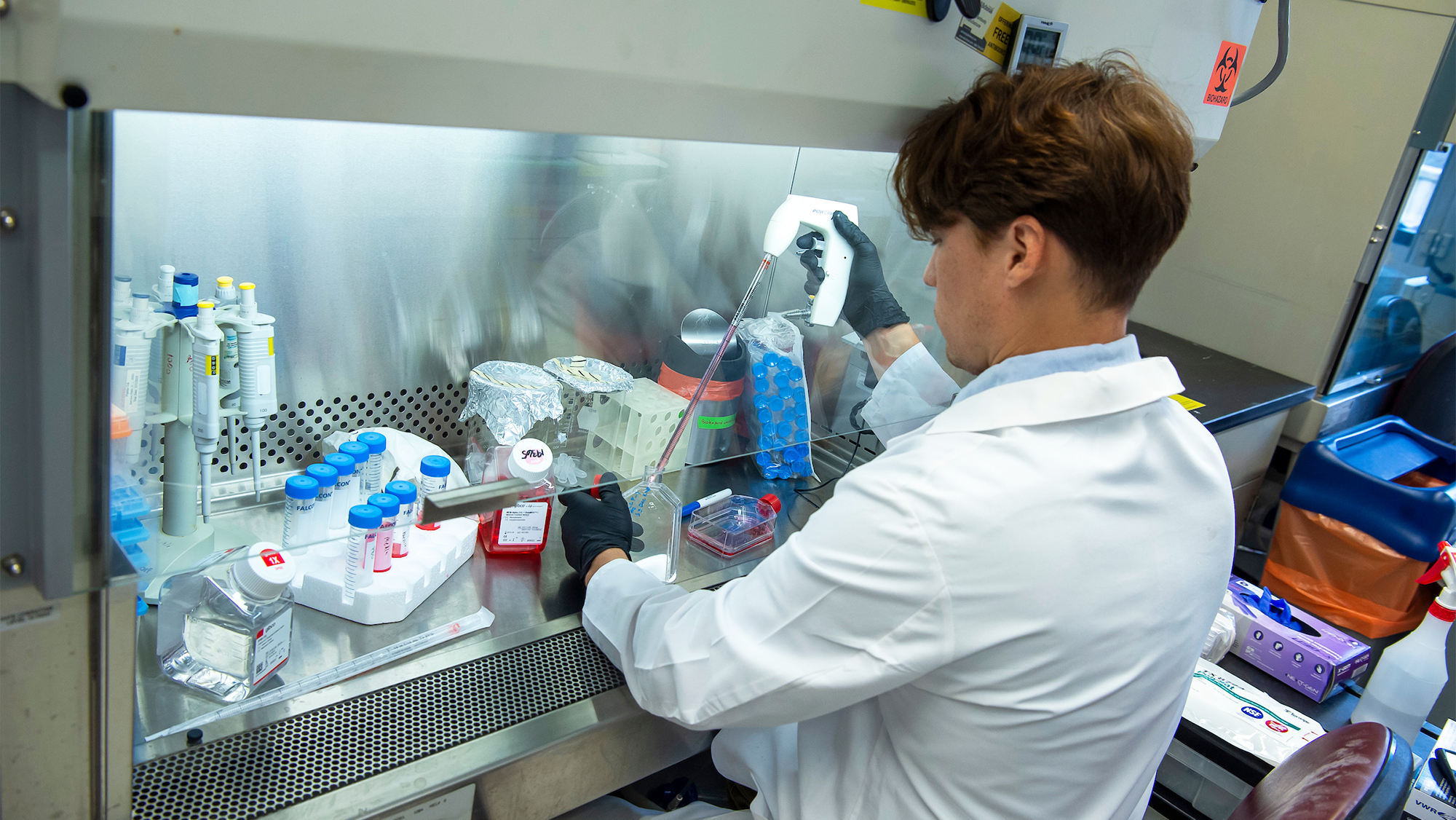
Georgetown University Medical Center is committed to shaping the next generation called to be researchers in the biomedical and health sciences.
A Tradition of Education
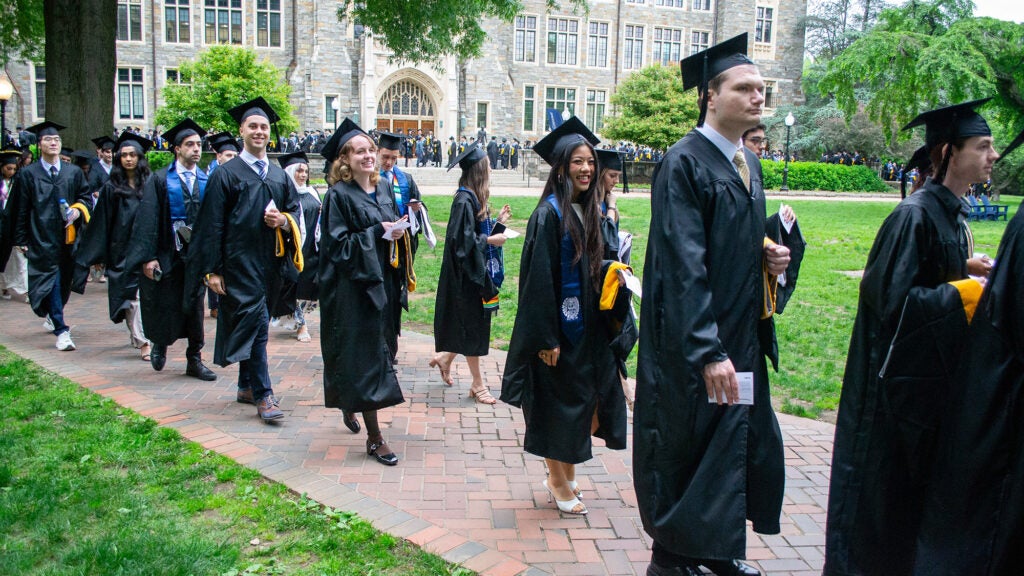
As a Catholic and Jesuit university, Georgetown has long understood its responsibility to help meet the world’s most profound needs.
Guided by that tradition, Georgetown University Medical Center educates and develops generations of researchers, clinicians, and health professionals, equipping them to deploy their expertise in service to the common good.
Graduate Education at Georgetown University Medical Center
Biomedical Graduate Education
The Georgetown University School of Medicine offers Biomedical Graduate Education (BGE) programs that encompass master’s, PhD and certificate programs across basic and applied science, clinical disciplines, data science and pre-health training.
BGE programs foster an intellectual environment conducive to the discovery and communication of knowledge and new research. These programs offer a variety of outstanding educational and research training environments that are responsive to the needs and interests of a diverse population of more than 900 students.
Notable among the opportunities at BGE are the number of T32 training grants available. These NIH-funded, externally peer-reviewed institutional training programs support BGE postdoctoral fellows and PhD students as they contribute to our research enterprise across many disciplines.
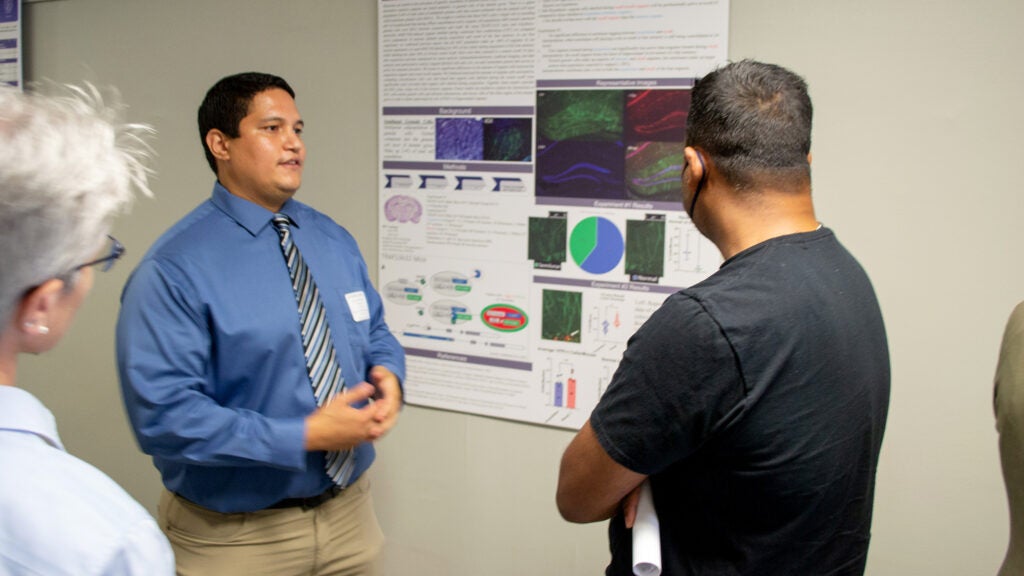
Original research forms the foundation of PhD programs at Georgetown. Each fall for more than 25 years, PhD students at the medical center have showcased their research through oral presentations and poster sessions at Student Research Day. This event offers students the opportunity to develop their presentation skills, receive feedback on their work and share research with the medical center community.
Medical Education

The Georgetown University School of Medicine also offers a four-year program of professional education leading to the MD degree, as well as an MD/PhD or MD/MBA at Georgetown, and an MD/MPH in conjunction with the Johns Hopkins Bloomberg School of Public Health. Several MD/MS degrees are also available including a recently added MD/MS in global infectious diseases.
In particular, the MD/PhD program trains the next generation of medical scientists who will pursue careers in clinical, translational, and/or disease-related basic research. Particular strengths of the program are cancer research (in conjunction with Georgetown University’s Lombardi Comprehensive Cancer Center) and neuroscience. Newly accepted students received a full tuition scholarship and stipend for the entirety of their training.
Independent scholarly projects are a graduation requirement for all medical students. Each student pursues a scholarly project that seeks to answer a research question under the supervision of a mentor. Students present their projects each spring at the George M. Kober Research Day.
To encourage early participation in research among medical students, both the Office of the Dean at the School of Medicine and MedStar Georgetown University Hospital provide summer scholarships to selected first-year students. Among these opportunities is the Frank S. Pellegrini, MD Scholarship, an endowed research funding opportunity for medical students that honors the 1943 Georgetown medical graduate for which it is named. Through participation in the program, students have the opportunity to work with faculty mentors throughout the medical center and affiliates within the MedStar system.
Georgetown University School of Health
Master’s programs at the School of Health are geared toward prospective students who have broad academic interests in:
- Global health
- Global infectious disease
- Climate, environment & health
- Addiction policy
- Clinical quality and safety
- Health care administration and leadership
- Health management
- Health policy
Learn more about master’s programs at the School of Health.
The School of Health also offers a PhD in Global Infectious Disease. This program delivers training in infection prevention and control that brings together science, health, technology, modeling and more. Students contribute original research to the body of knowledge in the field.
Georgetown University Berkley School of Nursing
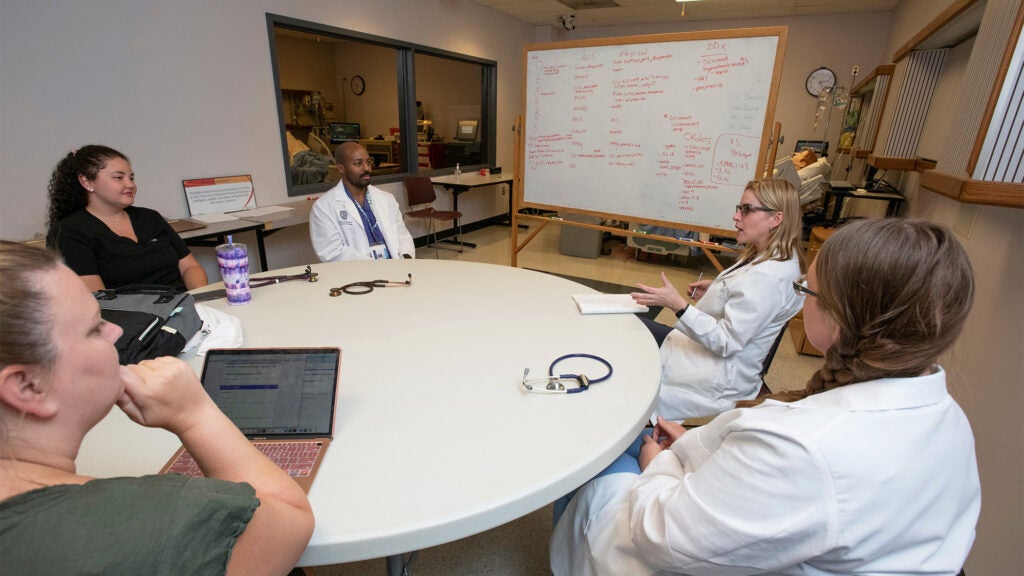
Graduate education programs at the Berkley School of Nursing are offered in a distance-based, online environment as well as in-person on campus. Master’s and doctoral-level options are available, including a PhD in Nursing program, which prepares graduates to be nurse-scientists. Students have the opportunity to conduct research under the mentorship of faculty.
Undergraduate Education
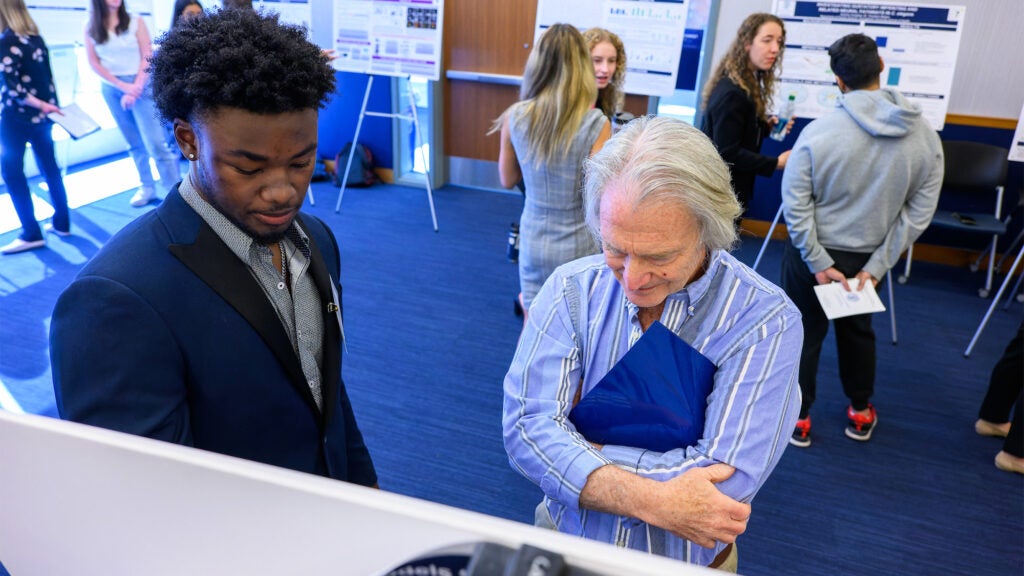
Throughout their time at Georgetown, undergraduate students enrolled in schools affiliated with the medical center experience a curriculum that emphasizes research and scholarship.
The Berkley School of Nursing and the School of Health integrate student research opportunities into their undergraduate and graduate programs. The BSN Honors Program at the Berkley School of Nursing and the Human Science Honors Program at the School of Health offer opportunities for high-performing undergraduates to conduct independent research projects under the guidance of faculty mentors.
Guided research is a major component of the Academy for Research, Clinical, and Health Equity Scholarship (ARCHES) in the medical education program at the School of Medicine. ARCHES provides concentrated support that is geared towards preparing program fellows for medical school and other health-professions-related graduate-level programs.